
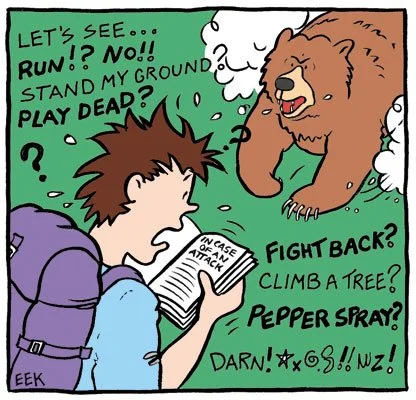
BEFORE setting out onto the trail, familiarize yourself with bear behaviour. Avoid surprising a bear and carry bear spray.

Please stay alert! Use your eyes, ears and sense of smell; be especially cautious and make noise when approaching areas with low visibility. CARRY BEAR SPRAY where you can access it quickly. Know how to use it.

Keep a respectful distance and NEVER APPROACH wildlife. Hike in a group, stay on the trail, be aware of your surroundings. Use your voice to make noise. Bear bells and other devices are questionably effective at best; CARRY BEAR SPRAY!


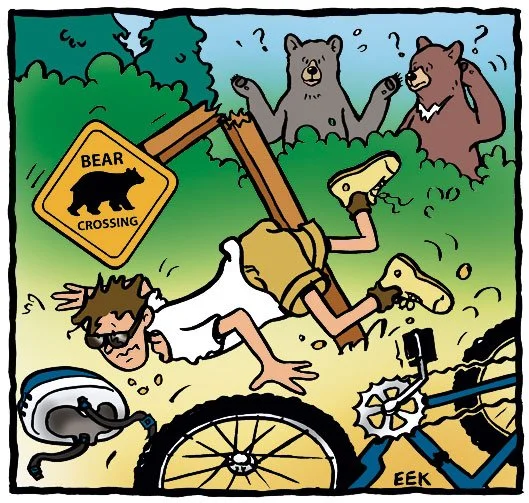
Riding on a fast moving bike in bear country can lead to a surprise encounter. While cycling, please stay alert and slow down, especially where views are limited. Make noise. Carry BEAR SPRAY where it is readily accessible.
Bear ENcounters
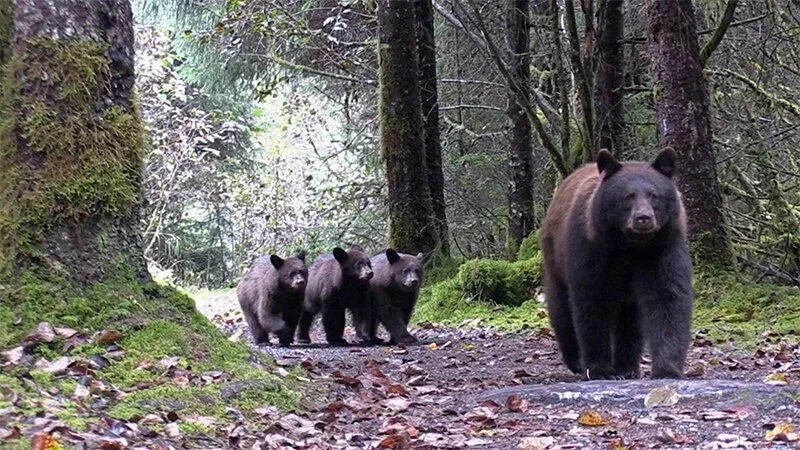
Real bears are neither stuffies nor villains. They are sentient beings with intelligence on par with our closest cousins, the great apes. Each individual bear possesses a unique ‘ursonality’ and is deserving of our respect and understanding. The more we learn about them, the more we realize that every encounter with a bear is not a life threatening event.
Avoidance - Your best Defence!
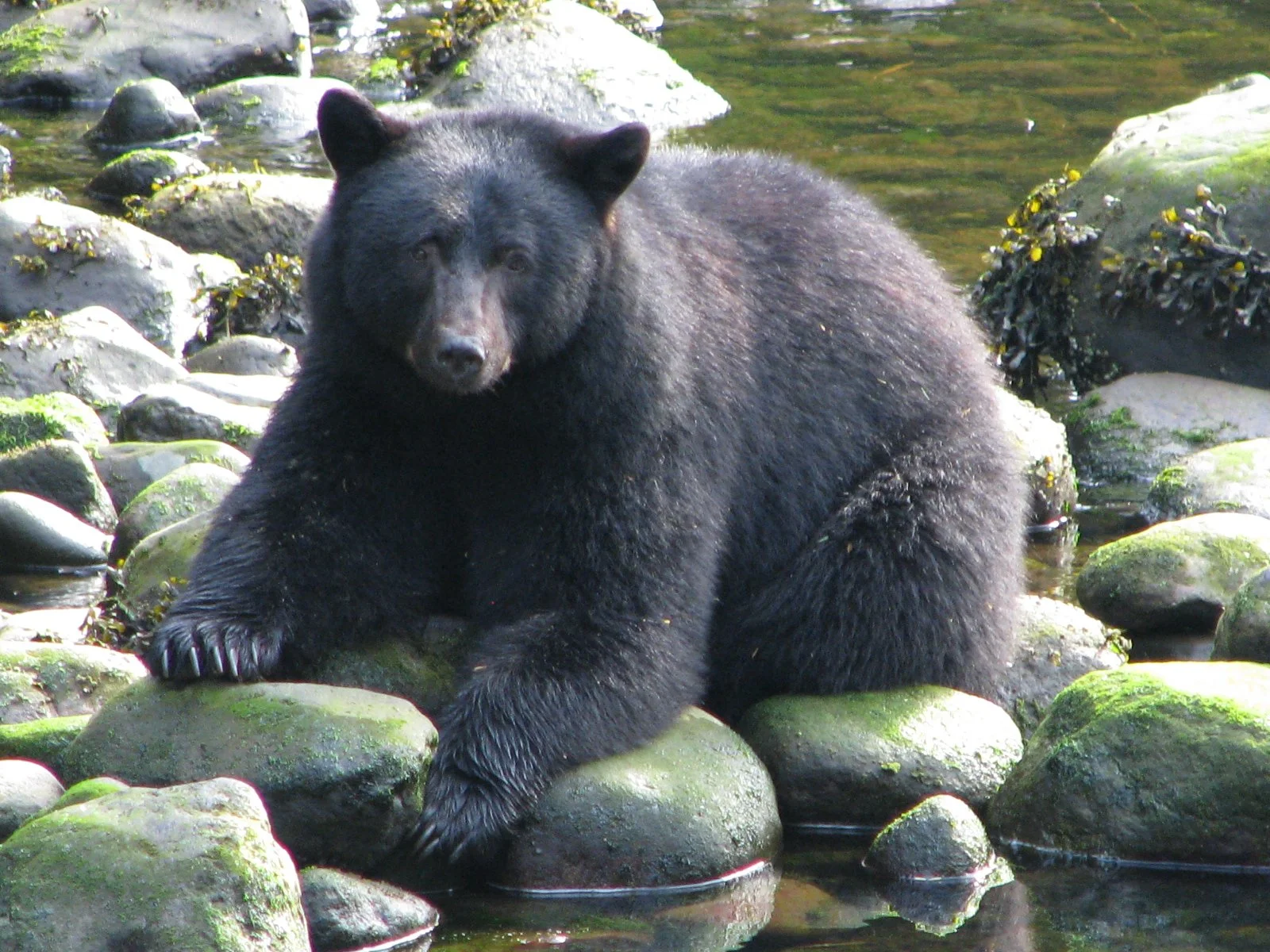
In general, bears are naturally peaceful creatures, going about their day to day activities, avoiding trouble and enjoying life. Knowing how to avoid negative encounters in the first place is the absolute very best way to stay safe in bear country. When bears perceive an imminent threat, they first communicate their feelings through body language and vocalizations, failing that, they may take action. As large, powerful animals, they will have the upper paw in a confrontation. Educating yourself on what to look out for and knowing how to act if and when you do meet a bear, BEFORE setting out on the trail, can help prevent serious injury. Do carry bear spray and know how to use it.
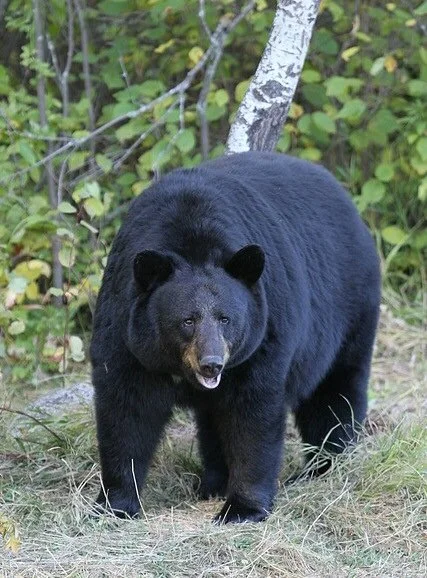
In certain locations, some bears, under the right conditions, have learned to trust or at least not fear people. They continue to stay alert to threats and aggressive behaviour from humans, as they would from other bears, and these same bears may react differently in alternative circumstances. Just because a bear does not run away, does not mean it is aggressive; it may simply be comfortable passing by you in your neighbourhood or even on a local trail.
The vast majority of encounters with black bears are benign, but it is important to be informed. Although most people react incorrectly in an encounter, rarely is someone actually hurt as a result. In some cases, however, an incorrect reaction can turn an otherwise benign encounter into a hazardous one. Please remember, every species, including ours, has its outliers, and bears are no exception. Learn what to do and be prepared for an encounter at any time. In the rare case you meet the wrong bear, at the wrong time, in the wrong place, and you do the wrong thing, you risk injury.
be aware of your surroundings
Although you could meet them at any time, bears are most active in the early morning, evening and during the night. Be extra mindful if you are out during these hours.
Bears are not always aware, be especially alert and make extra noise near running water, approaching blind corners and travelling into the wind.
Needless to say, salmon streams during spawning season are the pinnacle of attractants.
Watch, listen, make noise and travel carefully in thick brush, heavy tree stands and overgrown trails so as not to surprise a bear.
Areas with lots of flowering or fruiting plants are attractive to bears especially during late summer and fall.
Watch for tracks, scat, torn up logs, claw marks or bark stripped off trees, overturned rocks, day beds and areas that look like they have been dug up.
It is easy for bears to be hidden behind trees, in brush, gulleys, or boulder fields.
If you smell rotting meat or notice scavengers in the air, leave the area immediately!
Never use headphones in bear country and avoid the use of cellphones.
When cycling or jogging in bear country, you are travelling quickly and less aware of your surroundings. You are consequently at risk of surprising a bear at close range, which statistically, is one of the most dangerous things you can do.
In addition:
Leash your dog in bear country. Dogs can aggravate bears and cause them to lash out and injure dogs and/or more often humans.
Always respect a bear’s need for space. Never approach bears– enjoy them from afar.
Ideally travel in a group, talk loudly or occasionally call out, ‘Hey Bear!’ and/or clap your hands loudly.
Keep children in sight and close; do not let them run ahead.
Bear bells are not effective deterrents, use your voice, talk or sing to alert bears of your human presence.
Be careful not drop food scraps or wrappers on the trail.
ALWAYS CARRY BEAR SPRAY and know when and how to use it.
COMPLETE GUIDE TO STAYING SAFE IN BEAR COUNTRY: Learn about bear behaviour before you set out into the wild. Bears communicate through body language and vocalizations and once you understand this, you will find, that contrary to popular mythology, that bears can be quite predictable. It is important to be able to determine if the encounter is defensive or non-defensive, because it can help determine your course of action. Because the species evolved in different habitats, encounters with grizzly and black bears can vary slightly.
VIDEO - Staying Safe in Bear Country
IF YOU SEE A BEAR AND THE BEAR IS UNAWARE OF YOUR PRESENCE:
Stop where you are. Respect a bear’s need for space and never approach it. It’s best to quietly leave the area while keeping an eye on the bear. If you decide to continue, keep your eye on the bear for changes in position and have your bear spray at a ready. Consider an alternative return route. Be aware, that if the bear is not looking at you, it may still be fully aware of your presence.
If you meet a bear and the bear is aware of your presence:
If the bear lifts its head or simply changes its position without looking at you, it is likely aware of your presence.
If the bear stands on its hind legs, it is simply trying to assess what has caught its attention. This is not an aggressive action.
Ready your bear spray.
Never turn and run.
Do not yell or try and make the bear leave! Never shout or act aggressively when encountering a mom with cubs.
Use your voice to speak calmly, “It’s okay bear.”
It’s now best to leave the area, calmly and slowly back away, keeping a ‘soft eye’ on the bear.
If you decide to continue on, keep your eye on the bear for changes in position and have your bear spray at a ready. Consider an alternative return route.
Most often a bear encounter will remain totally benign. If a bear happens to be walking towards you, on or off the trail, is not staring directly and intently at you, shows no signs of agitation or aggression, it may simply be unafraid of, and/or accustomed to the presence of people. Give it a friendly “Hi!” and simply let it pass by stepping aside and off the trail if necessary.
if the bear approaches you or begins to follow you:
Lift your arms above your head and say in a calm voice, “Hey Bear.”
Speak to it in a firm voice. At this point you can make direct eye contact with the bear.
If the bear continues to follow you; stand your ground, lift your arms above your head to make yourself look bigger; shout firmly at the bear and be prepared to use your bear spray. Hopefully the bear will stop and/or turn around. At this point, back away slowly, keeping an eye on the bear and immediately leave the area.
If the bear charges, or refuses to back off, deploy your bear spray. https://www.scbearalliance.com/bearspray
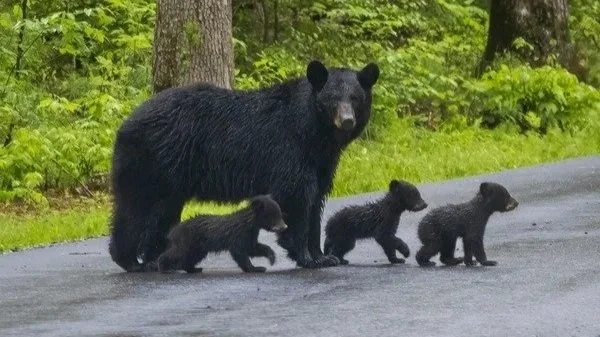
IF YOU MEET A MOTHER WITH CUBS ON A TRAIL Or IN YOUR NEIGHBOURHOOD:
A mother black bear will usually signal her cubs to climb a nearby tree while she remains at the base of that tree, or she might also climb the tree and may make whoofing, moaning and/or clacking sounds, indicating she is upset. BEAR SOUNDS
Mother and cubs may also run a short distance to get away from the area. In either case, calmly remove yourself from the situation.
Never shout or act aggressively when encountering a mom with cubs.
There are times when you might see a cub on his or her own. Mother bears will sometimes leave their cubs in a safe location, in a tree or on the ground, while foraging nearby. NEVER APPROACH A CUB! Leave the area immediately.
For information on what to do if you believe you have seen an orphan cub go to: https://www.scbearalliance.com/orphan-cubs
MOUNTAIN BIKING IN bEAR country
Riding on a fast moving bike bears may not hear nor see you approaching which can lead to a surprise encounter.
Stay alert and slow down, especially where views are limited.
Make noise and occasionally shout, “HEY BEAR!” or ring your bike bell if you have one.
Carry bear spray where it is easily and quickly accessible, as on a chest holster and not in your back pack.