
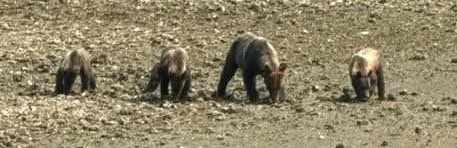
grizzly bears
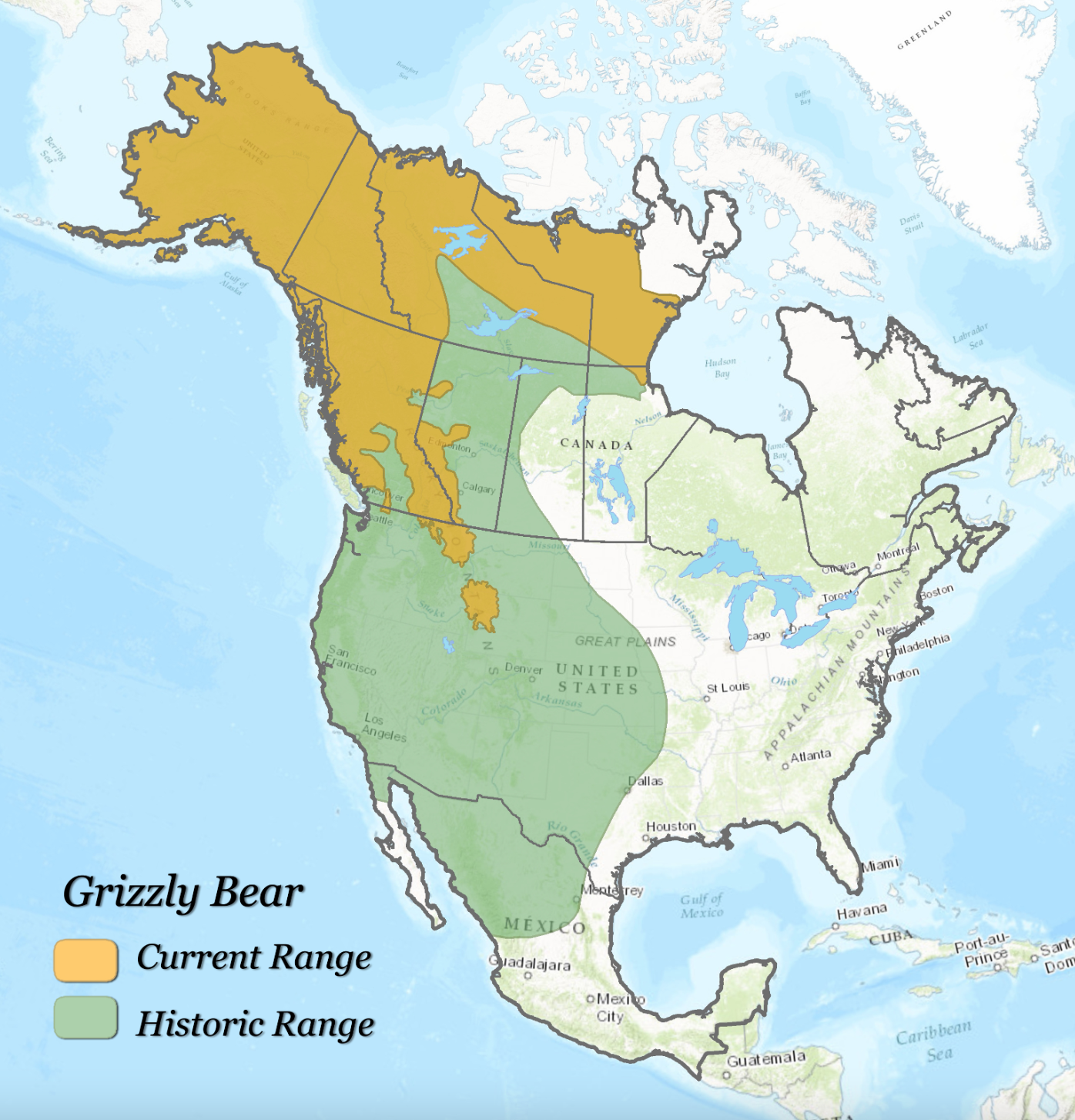
Lisa Landenburger, USGS - Interagency Grizzly Bear Study Team. Public domain. Sources: IUCN, M. Proctor, Interagency Grizzly Bear Study Team.
before colonization - historical range
Historically, grizzly bears ranged across the entire western half of North America, stretching from the Arctic Ocean down to central Mexico, and from the Pacific Ocean eastward across the Canadian prairies, including the lower elevations and plains of Alberta, Saskatchewan, and Manitoba. In the US, their populations stretched across the Great Plains to the Dakotas, Nebraska, Kansas and Texas. Before European settlement, it is estimated that over 100,000 grizzly bears lived in North America. Human persecution, bounties, and habitat conversion have reduced their numbers to approximately ±55,000. Grizzly bear populations are notoriously difficult to pin down accurately, but, in recent history, BC has had official estimates of anywhere between 6,000 to 17,000+, depending on lobby groups.
In Canada, grizzly bears now occupy only 60% of their former range; the US population has been reduced to just 2% to 6% of its original footprint.
Today grizzlies have returned to portions of their historic range where they have not been present in generations. The recovery of some populations is one of the greatest conservation success stories of our time, but also creates new challenges for wildlife managers and humans who share the landscape with bears.
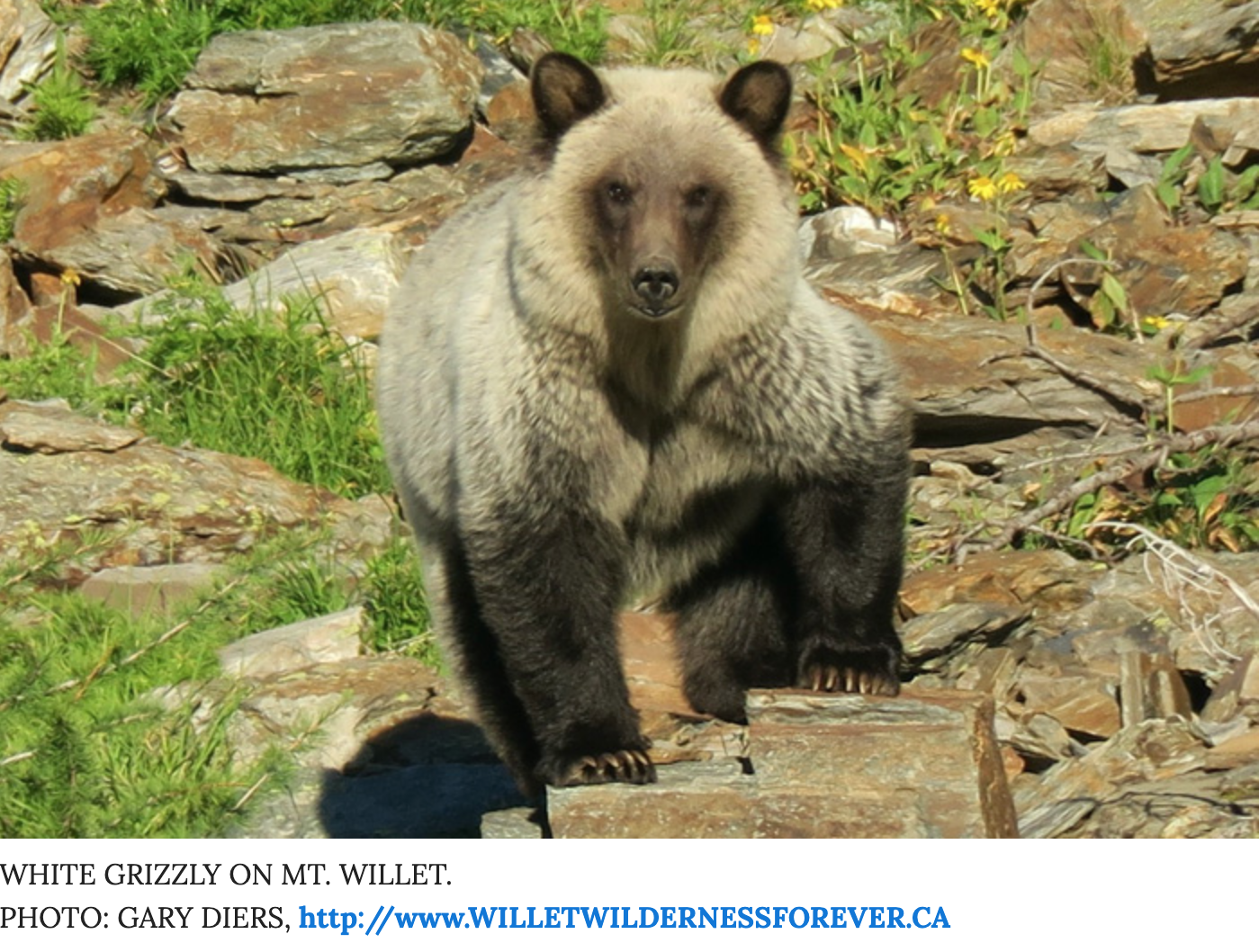
A ‘white’ West Kootenay grizzly bear.
not all Grizzly bears are brown or grizzled!
Grizzly bear fur colour ranges from light blond and cinnamon to dark brown or nearly black. White or silver tips on the guard hairs often give the fur a frosted or "grizzled" appearance. Occasionally white grizzlies have made an appearance. A well-known female white grizzly named Nakoda became famous in Banff and Yoho National Parks in the Canadian Rockies after being documented starting around 2017. The white or creamy coat is caused by a rare, non-albino recessive gene.
In the West Kootenays, there are individuals who are almost white with darkened extremities.
Grizzlies are called brown bears in some locales, however, they are the same species.
Size and Strength
Adult Males grizzlies can weigh between 180–360 kg on average, although large coastal males can exceed 385–680 kg due to a rich salmon diet. Adult Females generally weigh between 90–180 kg, with coastal females growing larger than inland ones. On all fours, they can measure about 90 to 140 cm high at the shoulder. Standing on their hind legs, grizzly bears can reach between 1.8 to 2.6 meters in height.
Location can affect size. Coastal populations are significantly larger and their ranges are smaller in size than inland populations due to the richness of their diets and a greater abundance of natural food, such as salmon. Coastal bears kill significantly fewer livestock than interior bears primarily because coastal regions offer abundant, reliable marine food sources like salmon, reducing the need for bears to forage widely or prey on domestic animals. Salmon are less dangerous to kill than large hoofed animals. Bears are opportunists and prefer to feed on the easiest most nutritious food that is readily available. Coastal brown as well as black bears have steady access to high-protein salmon, clams, and intertidal resources. Inland or interior bears face harsher, scarcer food landscapes, driving them to range farther and feed opportunistically on available mammalian prey or livestock. They tend to be more tolerant of other bears and people than interior grizzlies because of less competition for food.
Many people fear bears because of their size and strength, but mostly because of misinformation and folklore. Statistically, bears have more to fear from humans than the other way around.
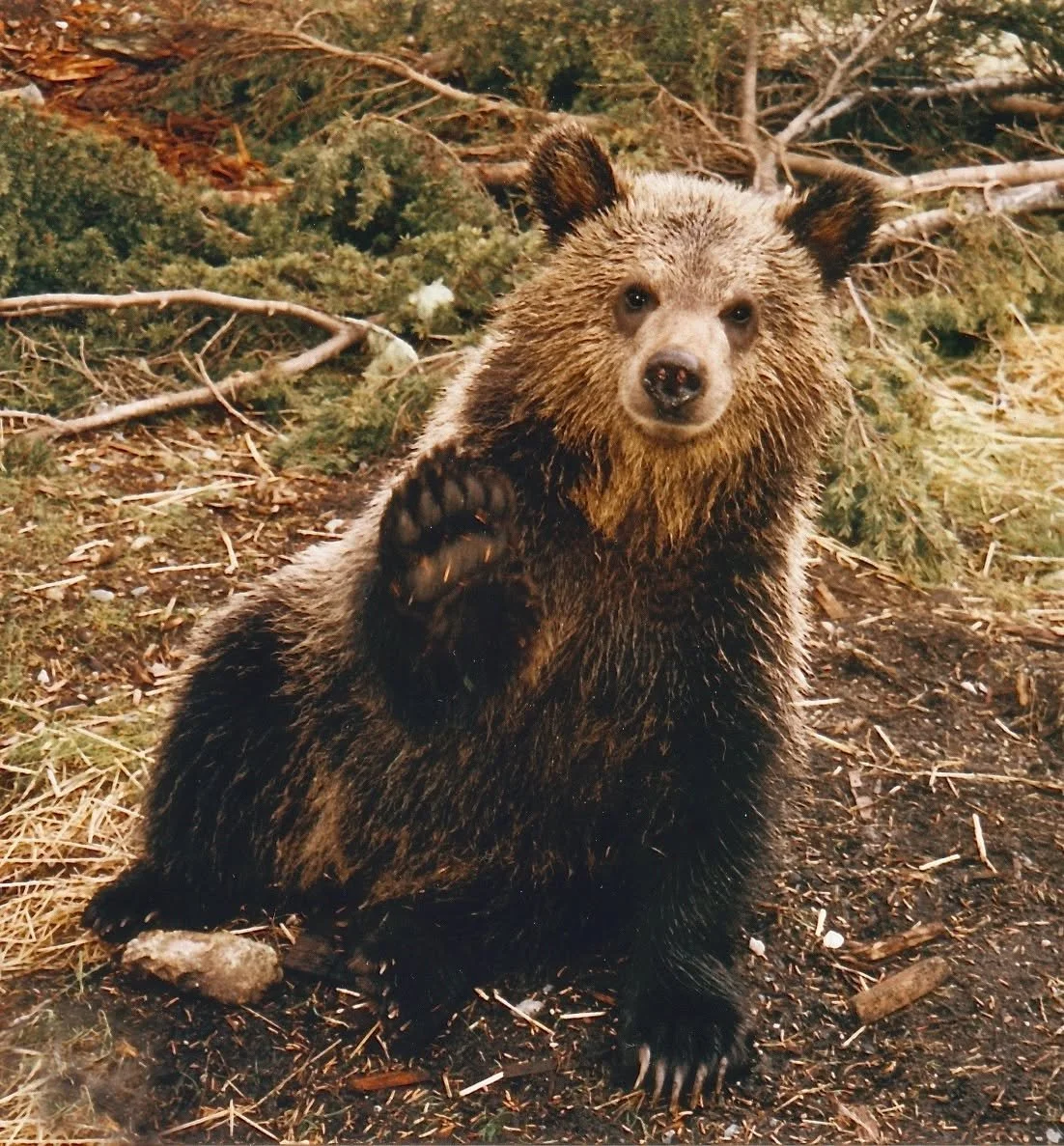
page under construction
GB vs BB id
Evolution
Reproduction
Behaviour/Context
Safety
Bears and the local elk population
Experience and perception (eg. blind men and the elephant)
Hunting